A working prototype and a qualified production line are different achievements separated by years and capital. What qualification actually requires and why hardware companies underestimate it.
Hardware founders raise on a prototype that works. The company's actual risk sits in the gap between that prototype and a part a customer will accept repeatedly, at volume, from a qualified line.
Software has no equivalent of this gap, which is why investors crossing over from software consistently underprice it.
What qualification actually means
A customer in aerospace, defense, medical or automotive is not buying a part that works. They are buying a process that produces parts that work, provably, every time.
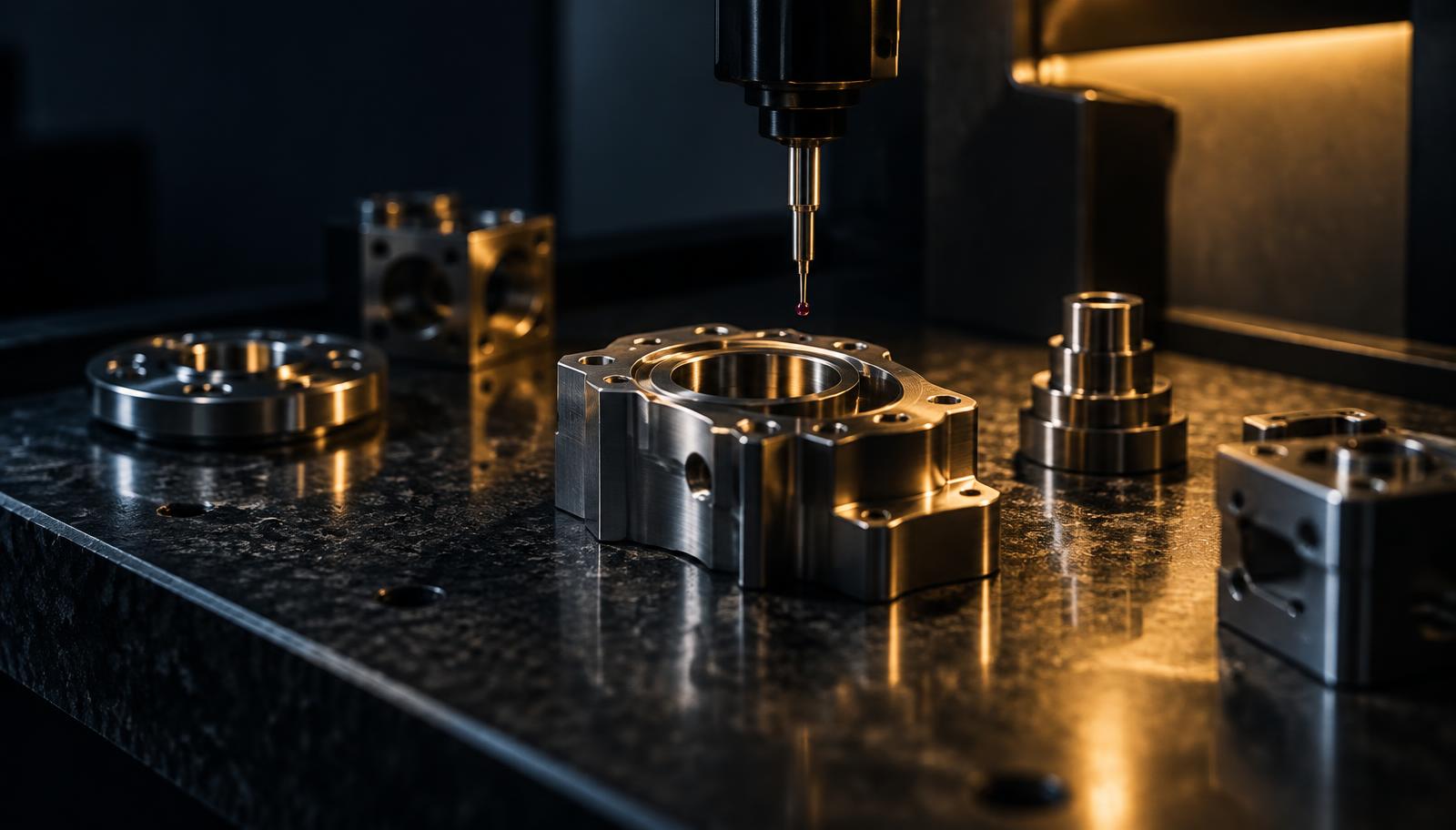
That means a documented and frozen process, first article inspection against the drawing, demonstrated repeatability, material traceability back to the mill, and often industry-specific system certification — AS9100 in aerospace, IATF 16949 in automotive, ISO 13485 in medical devices.
The consequence founders underestimate: once the process is qualified, changing it is expensive. Improving your own manufacturing can require requalification. The efficiency gain you found in month eight may not be worth the recertification it triggers.
Design freeze arrives earlier in hardware than founders expect, and it is a commercial event, not an engineering one.
Why the capital profile is different
Between prototype and production sit tooling, fixtures, inspection equipment, qualification runs that produce scrap by design, and inventory.
That capital is spent before revenue, on a timeline set partly by the customer's qualification calendar. A hardware company that models a software ramp will run out of money in the gap — not because the technology failed, but because the business consumed cash at a rate the plan did not anticipate.
The supply chain is the product
Your part is made of other people's parts, and your lead time is theirs.
Single-source components are the most common hidden risk in a hardware venture. A specialty alloy, a particular connector, one foundry. It works until it does not, and the recovery time is measured in quarters.
Qualifying a second source costs money and takes time, which is why almost nobody does it early. The companies that survive a disruption are the ones that did.
Where the domestic-production tailwind is real, and where it is not
Policy support for reshoring critical manufacturing is genuine and has moved capital. It is also slower and narrower than the headlines imply.
Incentives are targeted at specific sectors and often structured as cost-share requiring matching capital you have to raise first. Qualifying a domestic supplier does not make a customer switch — the customer still has to requalify, and requalification costs them money.
"Reshoring tailwind" is a real thesis. It is not a substitute for a customer who has committed.
Diligence questions
What is qualified today, and by whom?
What capital sits between here and first production revenue?
Which components are single-sourced, and what is the lead time?
What would a design change cost now — in dollars and in requalification?
Is the customer's qualification calendar in your plan?
The read
The prototype proves the idea. Qualification proves the business. They are separated by a stretch of capital-intensive, unglamorous work that does not generate announcements.
That stretch is also the moat. A qualified line with traceability and certifications is genuinely hard to replicate, and it is why the hardware companies that get through it tend to stay.
In person
Come see the Alliance in person
Members meet at our summits, fireside chats and coffee chats — smaller rooms than the name suggests, and the conversations are the point. Founders can also enter our next pitch session.
Tell us what interests you and we will send details on the next one.
Summit calendarFireside chatsPitch sessionsThe Alliance Dispatch